What the weather is like
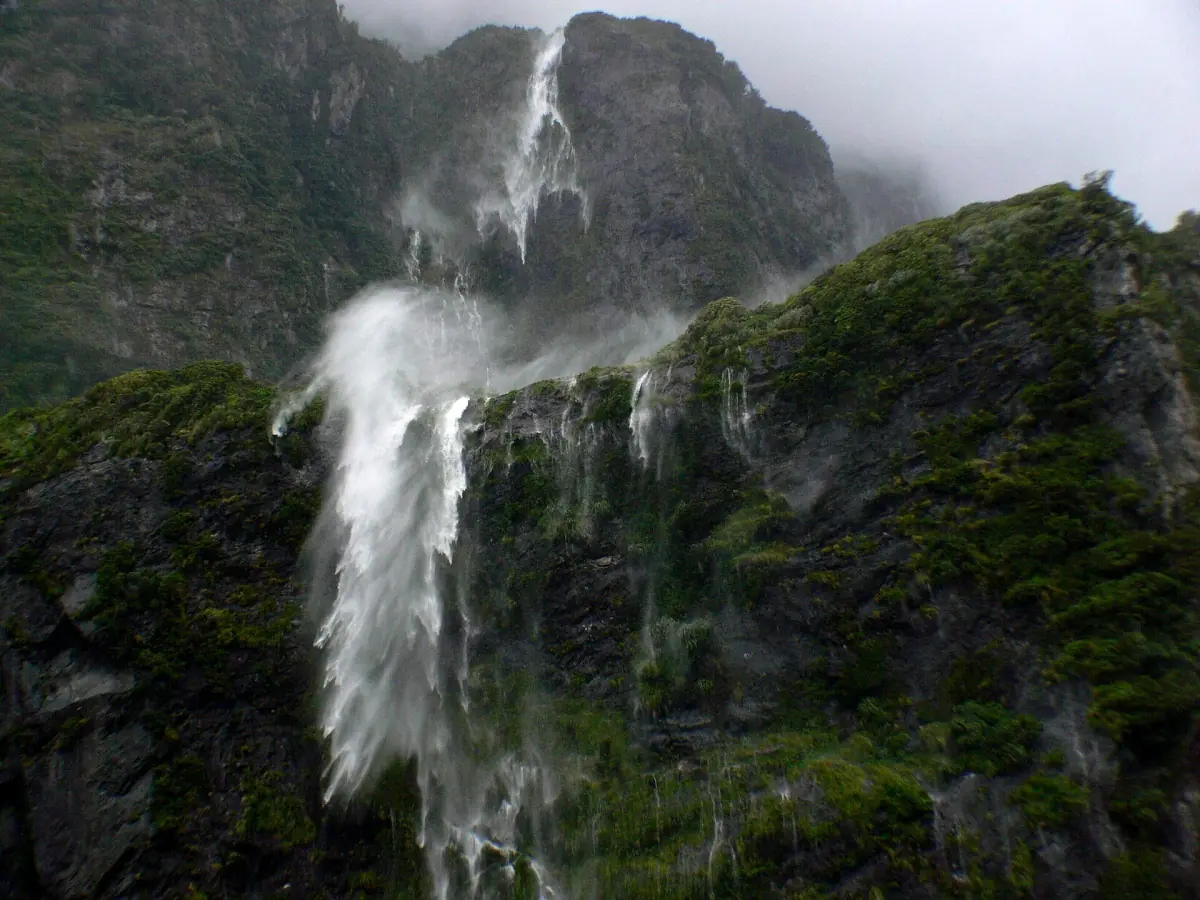
Milford Sound gets about 6.5 metres of rain a year on long-term averages. Rain falls in every month, and no month is dry. Plan for wet weather, bring a waterproof jacket and treat a dry day as a bonus. A cruise still works in rain, and the waterfalls are fuller after it.
The table below shows climate averages for 1991 to 2020, so it describes a typical month and not a forecast. Max and min are the mean daily highs and lows, not record values. Check the forecast close to your date.
Climate by month
Long-term averages for 1991 to 2020 (NIWA climate normals).
| Month | Mean max °C | Mean min °C | Rainfall mm |
|---|---|---|---|
| January | 19.5 | 10.7 | 667.2 |
| February | 20.0 | 10.7 | 466.6 |
| March | 18.5 | 9.2 | 571.3 |
| April | 15.9 | 7.0 | 528.2 |
| May | 12.5 | 4.9 | 645.1 |
| June | 9.3 | 2.3 | 440.4 |
| July | 9.2 | 1.6 | 468.0 |
| August | 11.2 | 2.7 | 457.0 |
| September | 13.2 | 4.1 | 541.3 |
| October | 15.0 | 5.8 | 617.2 |
| November | 16.4 | 7.6 | 557.7 |
| December | 18.5 | 9.7 | 585.1 |
The warmest months are December to March, and the coldest are June and July, when mean lows fall to 2.3 and 1.6 °C. These are averages, so single days can be warmer, colder or wetter.
Milford Sound tours for any weather
Cruises, coach trips, flights and kayak tours, with live prices and availability.
Rain, waterfalls and what still runs
Wet weather changes the view, not always the plan.
Rain and waterfalls
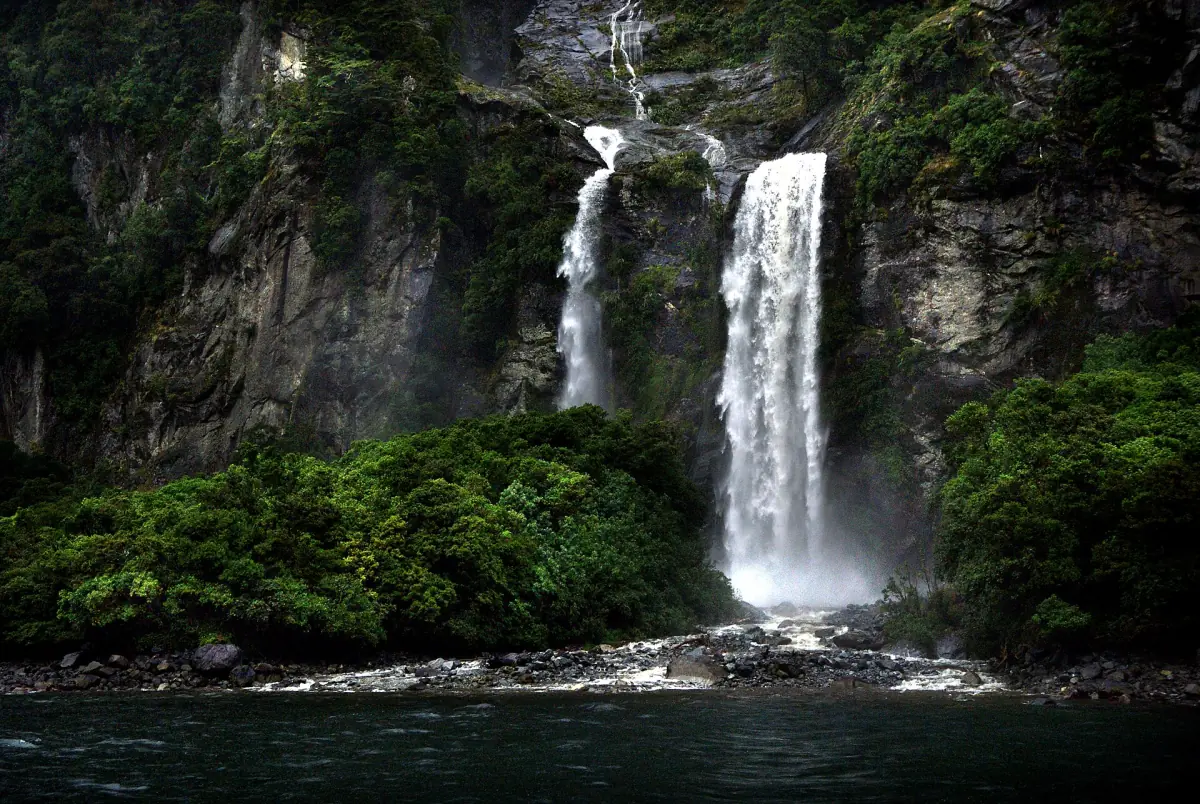
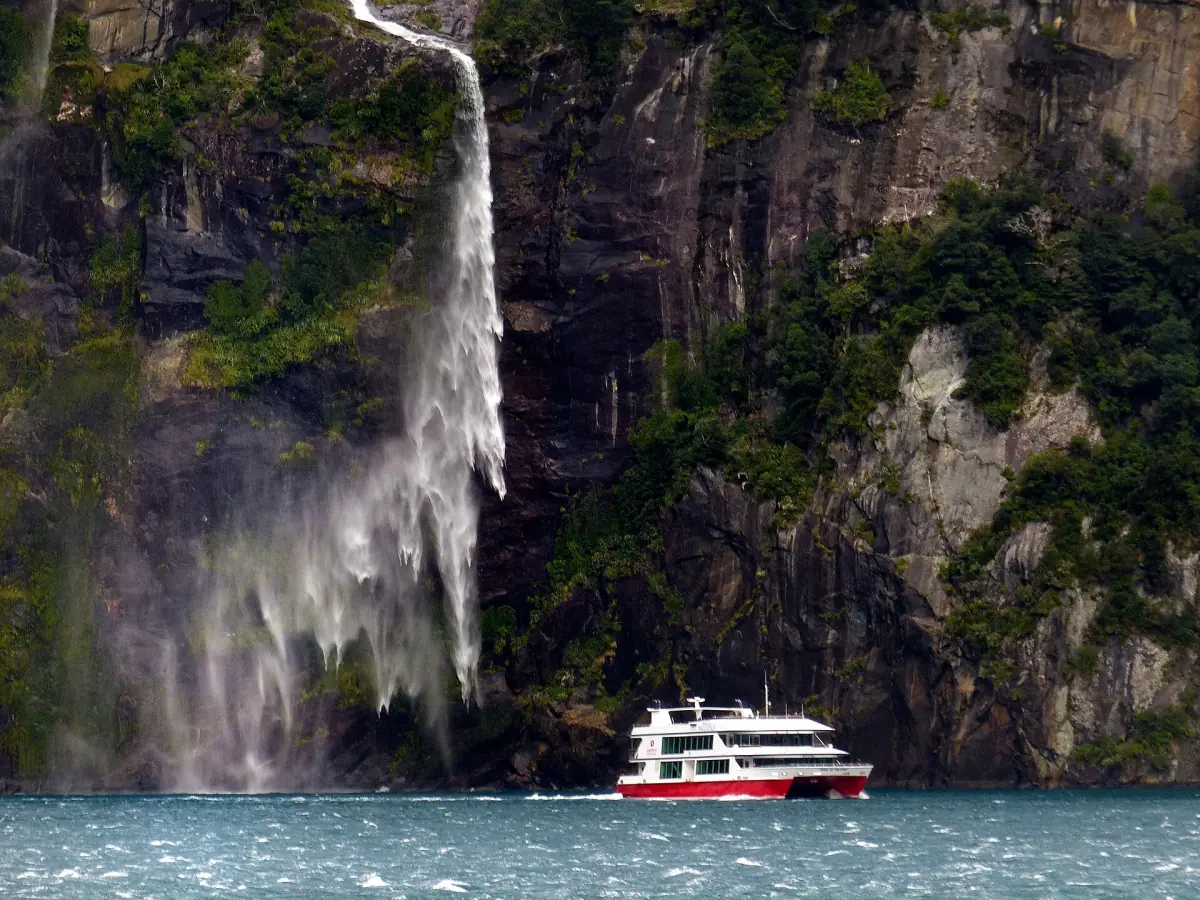
Milford Sound Tourism describes many waterfalls that only appear in rain. Southern Discoveries runs its cruises in rain as a rule, and the temporary waterfalls grow when it falls. Rain alone does not cancel a cruise.
Milford Sound cruises →Flights are different
A rainy cruise and a flight that cannot go are separate things. Heliworks makes a weather check 1 hour before a flight and charges no cancellation fee if weather stops it. Wings and Water lists weather cancellations too. Heliworks may also change the route or landing spots.
Scenic flights guide →Kayaking
Rosco's does not cancel for rain alone, but strong wind can end a trip. Winter runs April to October and summer November to March.
Kayaking guide →Sandflies
The Department of Conservation recommends sandfly repellent on the Milford Foreshore Walk. No month is guaranteed free of sandflies.
The season and the road
What changes through the year.
Summer: December to March
The days are warmest, with a mean high of 18.5 to 20.0 °C. January is also the wettest month in the table. Mitre Peak Cruises sails four times a day from October to April, at 8:50 and 11:10 a.m. and 1:30 and 3:55 p.m. The Milford Track season runs from 1 November 2026 to 30 April 2027, and the Fiordland Jewel overnight season from 31 October 2026 to 26 April 2027.
Milford Track guide →Winter: June to August
Mean highs stay near 9 to 11 °C and lows fall to 1.6 to 2.7 °C. June has the least rain by amount, though 440.4 mm is still a great deal. Mitre Peak Cruises sails twice a day from May to September, at 11:00 a.m. and 1:30 p.m.
Chains, snow and avalanche closures
Milford Sound Tourism recommends carrying chains from May to September. The Department of Conservation advises checking road conditions in winter and spring, and chains can be required. The road is not always open: NZTA documented avalanche closures between the lower Hollyford Road and Donne River from 26 to 30 August 2026. Check the current NZTA status before you drive.
Milford Road guide →Spring and autumn
September to November and March to May sit between the extremes. Mean highs run from 12.5 to 18.5 °C in those months, with 528 to 645 mm of rain. Avalanche risk on the Milford Track can last until December.
Choosing your time to go
No month is dry, so choose by what you want.
February is the warmest month and June is the driest by amount, but neither is safe from rain. Pick your month for the services you want. A summer visit gives you the Milford Track, the Jewel and four daily Mitre Peak departures. A winter visit means fewer Mitre Peak sailings, colder air and more care on the road.
The Milford Road
Homer Tunnel, Mirror Lakes and the winter road.
Milford Sound cruises
Times by season and what runs in rain.
Where to stay
The lodge, Te Anau and Queenstown.
Other South Island weather guides cover Franz Josef and Mount Cook.
Milford Sound weather: frequently asked questions
When is the best time to visit Milford Sound?
No month is dry. February is the warmest, with a mean high of 20.0 °C, and June has the least rain by amount at 440.4 mm. Choose by what you want to do, then expect some rain.
How much does it rain at Milford Sound?
The monthly averages for 1991 to 2020 add up to about 6,545 mm, or 6.5 metres a year. Every month receives between 440 and 667 mm.
Does a cruise run in the rain?
Yes, as a rule. Southern Discoveries sails in rain, and rain makes extra waterfalls. Flights and helicopters depend on the weather and can be cancelled.
How cold is Milford Sound in winter?
July has a mean high of 9.2 °C and a mean low of 1.6 °C. Snow or avalanche risk can close the Milford Road.
Do I need snow chains?
Milford Sound Tourism recommends chains from May to September, and the Department of Conservation says chains may be required in winter and spring. Check the NZTA road status before you drive.